Post Molding Equilibrium Protocols in International Precision Component Contracts
Post-molding equilibrium protocols define exact thermal and moisture stabilization states to ensure precision polymer parts meet dimensional tolerances.


Swell
Injection-molded semi-crystalline thermoplastics change dimensions after demolding. Ejection triggers secondary crystallization, internal stress relaxation, and moisture absorption from the surrounding air. Tool cavities cut to nominal drawing dimensions produce out-of-spec parts when measured immediately after demolding.
Polyamides show this clearly: unreinforced PA66 absorbs up to 8.5 percent moisture by weight at full saturation, driving isotropic volumetric expansion beyond 2.3 percent. Glass-filled grades restrict growth along the fiber orientation while expanding perpendicularly, which distorts precision cylindrical bores.
Parts measured twenty minutes after ejection can look compliant when they are not. Left in unconditioned staging areas, the molded plastic absorbs moisture from the air, drifting out of bilateral tolerance over the next seventy-two hours. International supply contracts often leave out the environmental stabilization rules needed for acceptance, leading to disputes when a destination plant rejects lots that passed inspection at the origin facility.
Relative humidity fluctuations between origin molding halls and destination warehouses drive dimensional variance exceeding drawing tolerances on tight-pitch components.

Thermodynamic Stabilization Windows
Relaxation in the polymer matrix follows predictable thermodynamic curves. As a part cools below its glass transition temperature, oriented molecules relax into lower energy states, shrinking the component even as moisture diffuses into it.
Failing to specify a clear stabilization window can stop automated assembly lines during optical inspection.

Bath
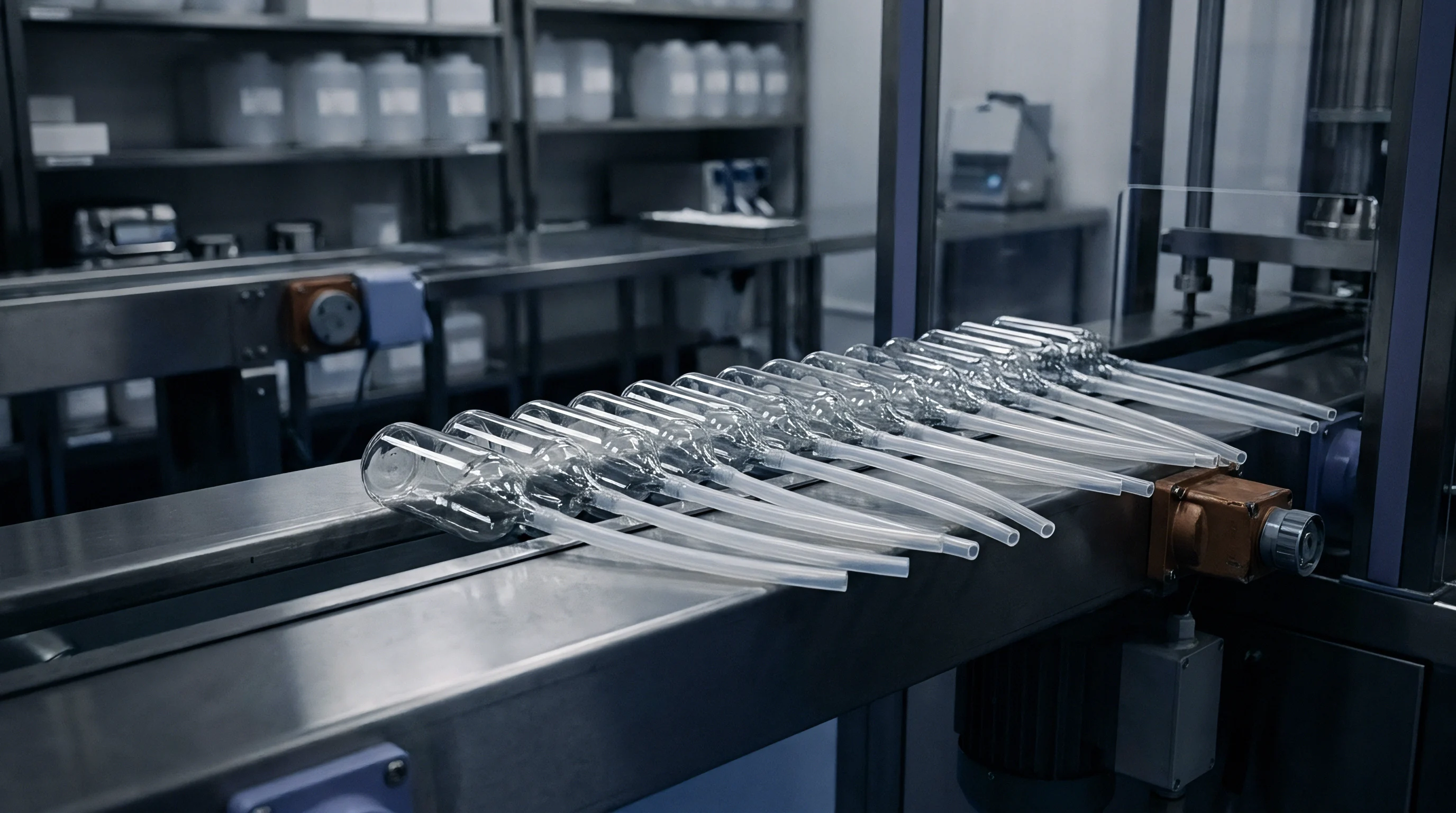
Accelerated moisture conditioning balances processing speed with dimensional stability. Dry-as-molded parts shipped across ocean routes absorb atmospheric vapor unpredictably in transit, shifting critical datums before they reach the dock. Standardized treatments bring parts to moisture equilibrium before packaging.
| Resin System | Standard Protocol | Equilibrium Target | Exposure Duration | Linear Dimensional Change |
|---|---|---|---|---|
| PA66 Unfilled | ISO 1110 | 2.50 to 2.80 wt% H2O | 48 to 72 Hours at 70C 62% RH | +0.50% to +0.70% |
| PA66 GF30 | ISO 1110 | 1.40 to 1.70 wt% H2O | 40 to 55 Hours at 70C 62% RH | +0.15% Transverse |
| POM Copolymer | ASTM D618 | 0.20 to 0.25 wt% H2O | 24 Hours at 23C 50% RH | +0.02% to +0.05% |
| PBT GF20 | ASTM D618 | 0.08 to 0.12 wt% H2O | 24 Hours at 23C 50% RH | +0.01% to +0.03% |
| PEEK Unfilled | ISO 291 | 0.30 to 0.45 wt% H2O | 96 Hours at 80C Immersion | +0.04% to +0.08% |
Conditioning baths run at elevated temperatures to shorten cycle times. Exposure to seventy degrees Celsius at sixty-two percent relative humidity forces moisture into thin-walled polyamide housings within forty-eight hours, reaching an equilibrium that would take months at ambient twenty-three degrees. Over-saturation is just as problematic.
Leaving parts in the bath too long plasticizes the polymer, lowering its modulus and causing bores to collapse under normal fastener torque.
Components that meet drawing tolerances immediately after ejection can still fall out of spec on arrival after absorbing ambient warehouse humidity.
Metrology
Coordinate measuring machine inspection protocols require strict thermal and moisture stabilization thresholds. Checking components before core temperatures equalize leads to false rejections. A glass-filled part with varying wall thickness can retain thermal gradients between thick bosses and thin ribs for hours after demolding.
- Thermal Soak Period requires clean parts to rest in the metrology lab at twenty-three degrees Celsius for twenty-four hours before probing.
- Moisture Verification Sampling tracks weight gain against control coupons using analytical balances with zero-point-one milligram resolution.
- Datum Fixturing Verification separates clamping deflection from genuine geometric warp during mechanical restraint.
- Repeatability Correlation compares origin touch-probe coordinates against destination optical scanning profiles to eliminate instrument bias.
ISO 291 defines the international standard atmosphere for conditioning and testing at twenty-three degrees Celsius and fifty percent relative humidity.
While metrology labs maintain strict environmental controls, disputes arise when destination plants inspect hygroscopic parts on open receiving docks. There, ambient humidity shifts of forty percent can distort part dimensions before the probe even touches the surface.
Tool steel cut to nominal dimensions before accounting for equilibrium behavior will turn out scrap indefinitely.
Dispute
Cross-border supply agreements founder when purchase specifications treat molded polymers like stable machined metals. Defining bilateral tolerances without specifying the conditioning state at release invites disputes. A precision gear molded in East Asia and inspected dry-as-molded can swell beyond functional limits while traveling through humid equatorial shipping routes.
| Supply Milestone | Physical State | Governing Document | Latent Defect Risk Exposure |
|---|---|---|---|
| Ex-Works Ejection | Dry As Molded | Origin CMM Inspection Record | Secondary crystallization shrinkage during cooling |
| Conditioning Exit | Accelerated Equilibrium | Moisture Uptake Log ISO 1110 | Uneven core diffusion in thick cross sections |
| Port of Departure | Barrier Foil Sealed | Desiccant Mass Verification | Seal puncture allowing transit moisture absorption |
| Destination Port | Vessel Hold Equilibrium | Data Logger Humidity Extract | Thermal degradation or cyclic expansion |
| Receiving Dock | Destination Acclimated | Receiving CMM Dossier | Frictional mismatch during automated system assembly |
Clear defect classification models establish where liability lies. When transit moisture causes dimensional drift, financial responsibility turns on packaging specifications. Vacuum-sealed aluminum barrier bags with calibrated desiccant loads shield parts from ocean humidity, holding the origin equilibrium state throughout transoceanic transit.
- Unsealed Polyethylene Bags allow rapid moisture transmission during ocean transit.
- Incomplete Desiccant Calculations let trapped air condense as temperatures cycle inside cargo holds.
- Undefined Acclimation Windows force inspectors to measure parts while internal temperature gradients remain.
Whether accelerated conditioning affects long-term mechanical creep resistance over multi-year automotive lifespans remains a subject of ongoing debate.

Settlement
Clear contract language eliminates post-molding dimensional ambiguity by linking quality acceptance to specific equilibrium states. Engineering and legal teams must state whether inspection occurs in the dry-as-molded state or after accelerated conditioning per ISO 1110. Likewise, tooling sign-offs should rely on capability indices measured on conditioned components rather than parts fresh off the press.
Precision component contracts often incorporate specific conditioning clauses:
Acceptance inspection occurs solely following seventy-two hours of conditioning at twenty-three degrees Celsius and fifty percent relative humidity, with moisture content verified between two point four and two point eight percent by weight.
Explicit contract terms protect procurement margins on international programs. Engineering drawings need to reference critical datum dimensions against environmental equilibrium baselines, while including moisture verification coupons inside sealed packaging gives clear proof of stability during transit.
Citing DIN ISO 20457 in master supply agreements places responsibility for post-molding shrinkage on the molder while anchoring receiving inspection to standardized thermodynamic baselines.