Structuring Delegated Authority Matrices in High-Volume Wafer Fabrication Facilities
Delegated authority matrices in wafer fabs align tool shutdown, scrap write-down, and recipe modifications directly to shift roles and process metrics.


Chamber
Cleanroom processing bays run on tight capital schedules. A single advanced photolithography cluster or plasma dry-etch chamber represents an asset amortizing at tens of thousands of dollars per operational hour. Production floor operators face split-second choices when in-line metrology detects a critical dimension drift or a particle spike.
When authority to halt a tool or scrap a multi-layer pattern resides solely with an off-shift fab director, uncommitted wafers continue through downstream furnaces and chemical vapor deposition sectors. Scrap compounds exponentially.
Authority delegation in semiconductor manufacturing matches authority to physical risk boundaries. The tool operator exercises authority to suspend chamber cycling upon automated process control alarm excursions. Line suspension stays local to that single tool chamber until intermediate metrology validates whether contamination crossed adjacent pods within the automated material handling system.
Moving beyond local intervention introduces cascading delays into the factory work-in-progress schedule.
A standard tool chamber halt prevents contamination spread across adjacent front-opening unified pods within two automated track transport cycles.
Modern 300mm facilities operate with automated equipment interfaces governed by statistical process control rules. Frontline equipment technicians decide on initial chamber maintenance steps without prior signoff from module managers, provided direct replacement parts sit within established preventive maintenance bill of materials allowances. Tool modification exceeding standard maintenance limits shifts accountability directly to the module staff engineer.
Production line balance requires strict adherence to these demarcation lines.

How Far down Shifts Can Tool Abort Authority Extend?
Shift structures in 24/7 fabrication units run on alternate twelve-hour cycles. Shift managers routinely hold authority to halt up to two chambers within a given module without engineering approval. Halting an entire bay or diverting carrier traffic along overhead transport tracks directly affects fab velocity.
- Chamber Abort Clearance permits the on-duty technician to dump processing plasma immediately upon radio-frequency impedance mismatches exceeding eight percent.
- Batch Quarantine Authorization allows the quality control inspector to freeze front-opening unified pods containing up to twenty-five wafers following automated optical inspection macro-defect warnings.
- Sub-Module Isolation Mandate grants the lead shift engineer the operational right to lock down five linked wet-bench positions during sudden resistivity drop-offs in deionized water feeds.
- Recipe Modification Override demands simultaneous digital tokens from the module staff engineer and the integration manager prior to adjusting thermal anneal soak durations by even single-second increments.
Tool owners frequently argue that waiting for module manager approvals incurs unacceptable tool idle costs. When operators halt high-cost chambers on false alarms, line linearity suffers across the entire lot schedule.

Yield
Wafer fabrication yield breaks into die sort yields and defect density limits across line integration stages. When yield excursions occur, decisions regarding lot release, scrap, or re-work carry immense balance-sheet exposure. A finished 300mm wafer on a advanced logic node carries a production value between eight thousand and twenty-two thousand dollars depending on structural metal layer completion.
Scrapping an entire twenty-five wafer carrier incurs five hundred thousand dollars in immediate unrecoverable material and processing write-downs.
| Organizational Role | Lot Rework Limit | Direct Scrap Authorization | Recipe Offset Bounds | Escalation Horizon |
|---|---|---|---|---|
| Process Technician | 1 Lot Nominal | Zero Direct Scrap | No Recipe Offsets | Immediate Shift Lead |
| Shift Integration Engineer | 4 Lots Cumulative | Up to 25 Wafers | Fixed +/- 1.5% Window | Module Manager |
| Process Module Manager | 16 Lots Cumulative | Up to 100 Wafers | Within Qualified Cpk Bounds | Operations Director |
| Fab Operations Director | Unrestricted Line Cap | Full Bay Write-Down | Complete Process Shifts | Executive Committee |
Decision matrices define operational margins before human deliberation begins. An integration engineer authorizes strip-and-re-etch loops only if the underlying film thickness maintains a uniform removal tolerance under five nanometers. If the film removal profile shows non-uniformity across thirty-two measurement sites, the lot moves into an engineering hold status.
The matrix dictates the exact engineering grade required to lift that hold.
A lot scrap signoff exceeding twenty-five wafers automatically triggers an immediate manufacturing execution system lockdown until a module manager signs the digital disposition ledger.
Re-work authorizations introduce their own structural risks. Stripping photoresist and wet etching sacrificial dielectric layers stresses underlying gate dielectrics. Engineers frequently encounter pressure from production planning departments to salvage suspect wafers to hit monthly output commitments.
Structured delegation matrices strip that negotiation away by tethering disposition rights directly to statistical process control defect indices rather than delivery schedules.
When line management overrides scrap criteria to artificially protect fab throughput numbers, defective die propagate downstream into packaging facilities, escalating final customer reclamation claims by orders of magnitude.
Ledger
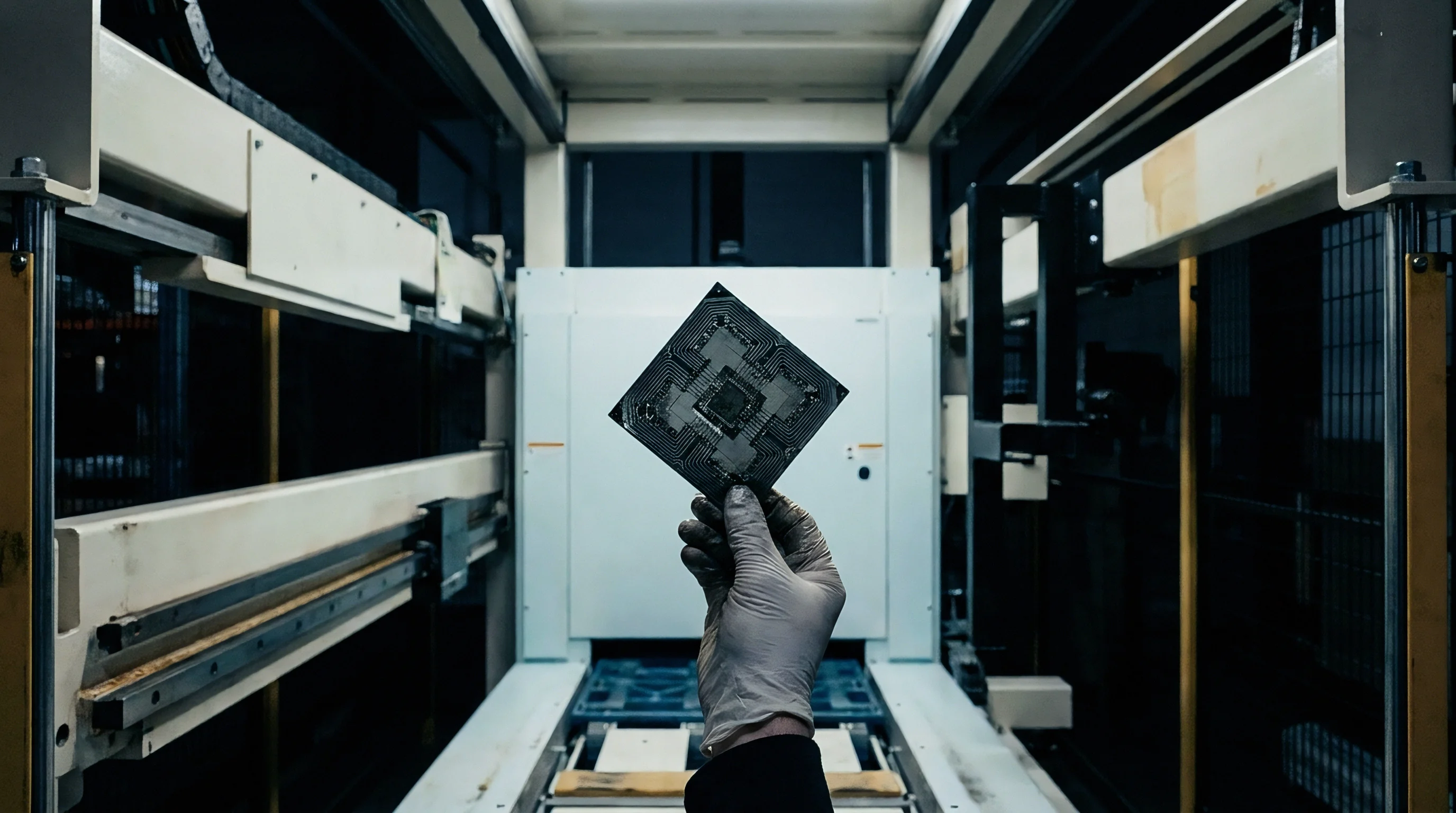
Every operational transaction within a high-volume manufacturing environment leaves a traceable digital trail inside the manufacturing execution system. A delegated authority matrix exists as executable system logic rather than as a dormant policy document. User privilege profiles map role categories to discrete transaction codes: lot splits, lot merges, rework flows, defect waivers, and equipment recipe changes.
Bypassing these permissions corrupts data lineage and invalidates production certifications.
| MES Transaction Name | Process Impact Level | Primary Approver | Secondary Verification |
|---|---|---|---|
| LOT-SPLIT-ENG | Split Lot for Defect Isolation | Junior Process Engineer | Shift Metrology Lead |
| RWK-STRIP-ETCH | Photoresist Strip and Re-pattern | Module Senior Engineer | Quality Assurance Manager |
| DISP-SCRAP-FULL | Complete Lot Disposal | Module Manager | Fab Operations Director |
| RCP-PARM-OFFS | Chamber Temperature Calibration | Equipment Specialist | Integration Staff Engineer |
Manufacturing execution software enforces segregation of duties at key transactional nodes. The engineer authoring a revised lithography exposure job file cannot issue the production clearance token to push that job into production lots. A second peer or a quality assurance representative verifies the metrology run data on dummy wafers prior to wide release.
This two-key digital mechanism eliminates unilateral process tampering during graveyard shift hours.
The production execution database rejects transaction records lacking concurrent cryptographic tokens from two distinct functional organizational units.
Authority delegation records serve an external compliance role during international quality standard audits. Auditors review audit trails to verify that process deviations carried appropriate managerial endorsements at the exact timestamp of execution. System logs demonstrate whether delegated thresholds stayed compliant or drifted into informal floor practices over consecutive quarters.
A supplier often claims that software system permission configurations adequately reflect management intentions while floor technicians regularly share administrative passwords during urgent tool recovery routines.


Split
Experimental wafers run alongside standard volume production lots to qualify new suppliers, test recipe improvements, or characterize defect anomalies. These wafer splits introduce process variation into clean manufacturing streams. Authority to inject non-standard wafers into production tools demands rigorous containment protocols to prevent catastrophic cross-contamination of mass production volumes.

Are Engineering Clearances Legally Binding across Alternate Crews?
Clearance protocols cross shift lines through binding electronic work instructions tied directly to lot tracking carriers. A change introduced during a daytime development run carries explicit shutdown limits that bind incoming night shift crews. The incoming shift lead cannot alter or dismiss test limits established by the outgoing engineering authority without invoking an executive override sequence.
- Process Change Initiation begins when a senior integration engineer registers a formal qualification split request within the fab enterprise software.
- Contamination Review Clearance requires the micro-contamination group to evaluate the chemical composition of unvetted precursor gases or metallization targets.
- Metrology Sampling Mandate dictates running three monitor wafers through particle counters prior to admitting any production wafer carriers to the modified chamber.
- Limited Pilot Run Authorization restricts initial thermal processing to a single test pod, halting downstream automated transport until automated defect inspection yields zero abnormal clusters.
- Volume Release Signoff concludes the split lifecycle through joint signoffs from the operations director, process integration manager, and quality assurance head.
Split-lot handling tests the discipline of manufacturing operations teams. Technicians often face conflicting instructions when split lots cause carrier bottlenecks at furnace banks. Production supervisors want standard lots to jump queue priorities, while integration teams need time-sensitive test wafers to complete their thermal cycle within tightly controlled queue-time windows.
Under SEMI E10 equipment reliability standards, any chamber conversion associated with experimental splits categorizes tool availability into non-scheduled engineering states, directly penalizing operational efficiency ratings.
Handover
Transitioning operational oversight between consecutive twelve-hour shift teams represents the highest vulnerability window for decision failures. During the thirty-minute shift overlap, outgoing shift managers transfer operational custody of roughly forty thousand work-in-progress wafers to the incoming leadership team. Delegated authority configurations must define who holds binding command when an equipment fire, gas leak, or severe defect excursion strikes during the physical transition period.
Handover documents consolidate tool status, line holds, and pending lot dispositions. The incoming shift manager formally accepts operational custody by checking the live status board and entering a secure digital endorsement into the plant command console. Until that precise transaction registers, the outgoing shift manager carries full regulatory, environmental, and operational accountability for fab incidents.
Ambiguity during shift changeovers invites catastrophic hesitation during emergency tool exhaust shutoffs.
Interim appointments within fab leadership hierarchies operate under identical operational boundaries. When a senior operations director vacates the seat, an acting director receives an explicit delegation letter specifying financial spend caps, recipe alteration permissions, and emergency plant shutdown rights. A general management mandate does not convey unlimited discretion.
The board or corporate vice president defines which decisions remain frozen pending permanent executive placement.
Structuring the delegated authority matrix across physical tools, yield thresholds, system ledgers, experimental splits, and daily handovers establishes an operational architecture resilient to cleanroom pressures. Clear authority allocations prevent costly executive bottlenecks while stopping runaway scrap events before wafers exit their processing bays. The lingering question remains whether automated artificial intelligence dispatch engines will eventually absorb human delegation boundaries altogether, rendering manual shift escalation matrices obsolete.